Fish profile · Salmonidae
Atlantic salmon
Salmo salar
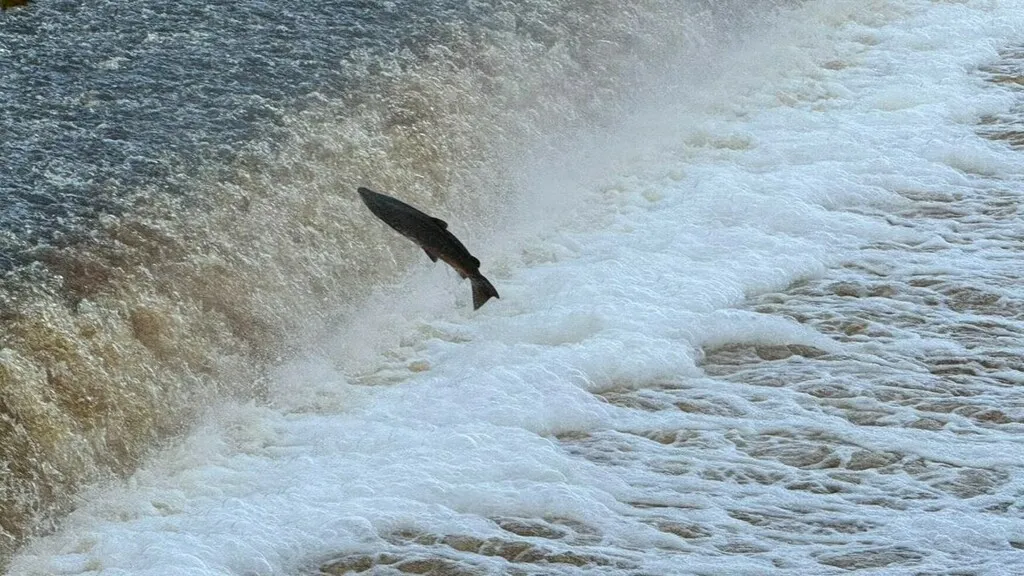
Atlantic salmon hatches in freshwater, grows at sea and returns to rivers to reproduce. Some adults survive spawning and make another migration. Wild populations have declined substantially in parts of their range; the remaining U.S. populations are protected, and U.S. seafood markets sell farmed Atlantic salmon.
Last reviewed 26 October 2026 · 7 sources
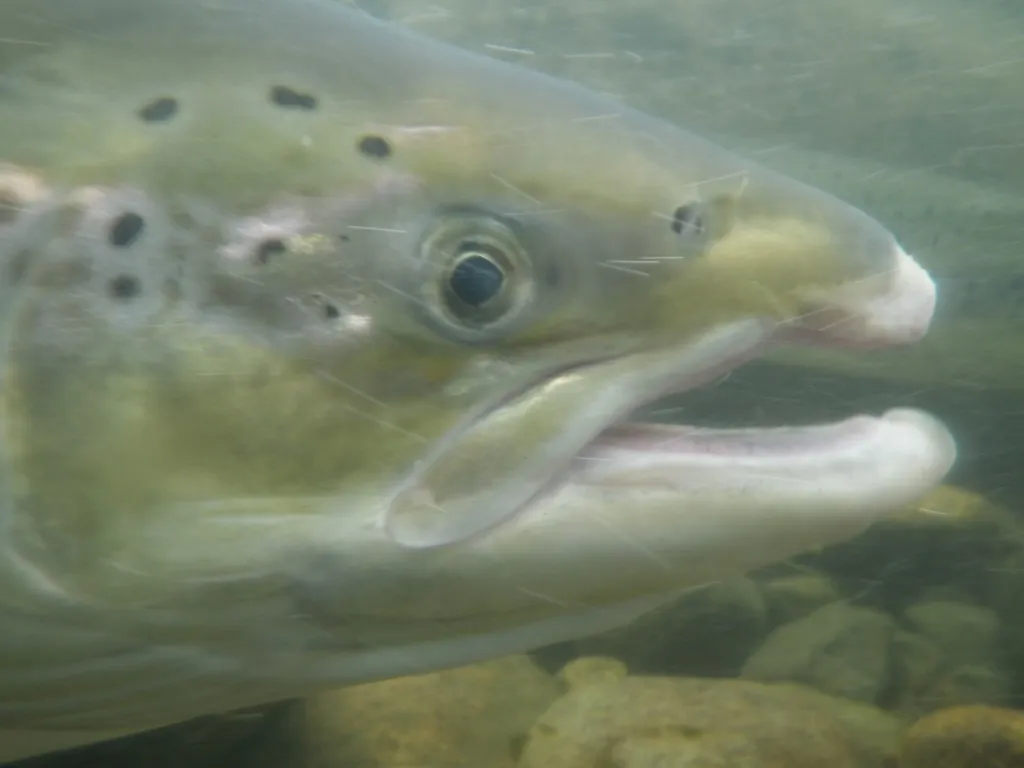
- Max length
- 150 cm
- usually 75 cm
- Max weight
- 46.8 kg
- IUCN
- NT
- Near Threatened
- Family
- Salmonidae
- order Salmoniformes
Category from the IUCN Red List, via GBIF (CC BY 4.0); it may lag the latest Red List assessment.
How big?
Linear scale · person 170 cm
Up to 150 cm and 46.8 kg.
How to identify
- Streamlined body, broadest near the middle
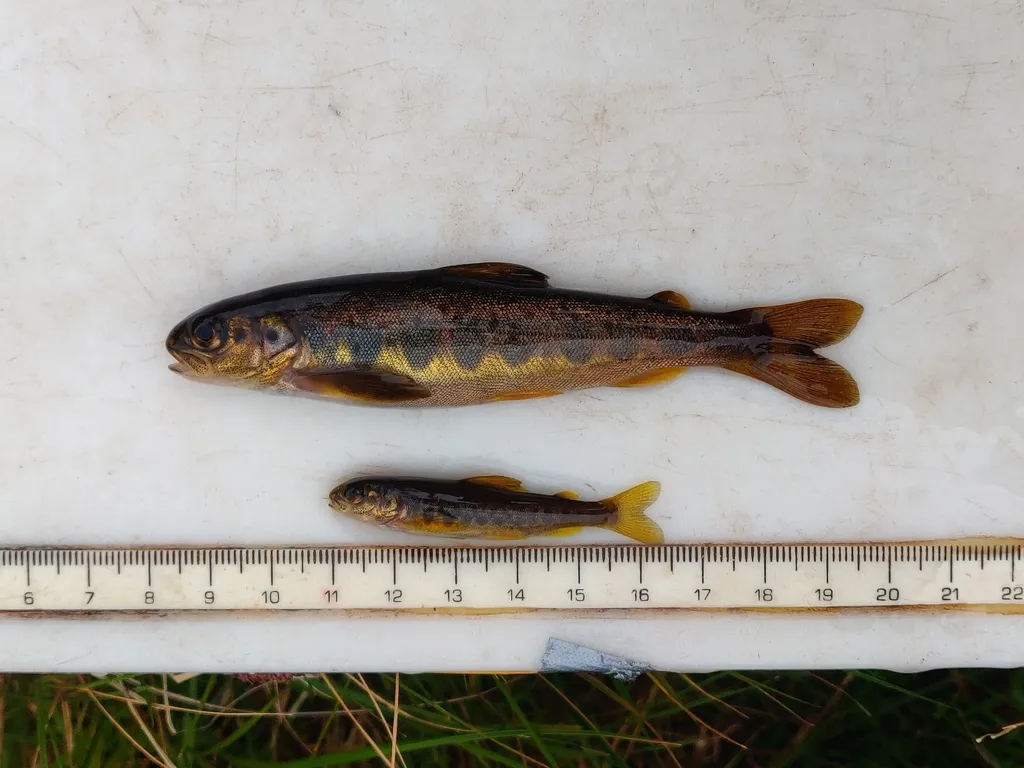
- Juveniles have dark vertical bars and red and black spots
- Sea-going fish have silvery sides, dark backs and pale bellies
Habitat
EstuariesCoastal watersOpen ocean
Cold freshwater streams support young fish and spawning adults; marine adults feed in coastal and oceanic waters.
- Diet
- Young fish eat insects and other invertebrates; large marine adults mainly eat smaller fish.
- Native range
- The North Atlantic and associated rivers in North America, Greenland, Iceland, Europe and Russia.
Catching it
- Season
- Wild Atlantic salmon fishing is catch-and-release only in Maine and in the rivers of Canada's Gulf Region, and the open season is short or closed on many rivers.
- Methods
- Fly fishing
- Baits and lures
- Artificial flies
Eating
Farmed Atlantic salmon has rich, fatty flesh that is pink to orange. NOAA notes that only farmed Atlantic salmon is available in U.S. seafood markets.
More photos
Sources
Last reviewed 26 October 2026