Fish profile · Anguillidae
Giant mottled eel
Anguilla marmorata
The giant mottled eel is the largest of the freshwater eels and the most widespread. Adults live in rivers and lakes and swim out to sea to spawn. It is eaten in some regions, and big live eels can sell for a high price.
Last reviewed 18 November 2026 · 4 sources
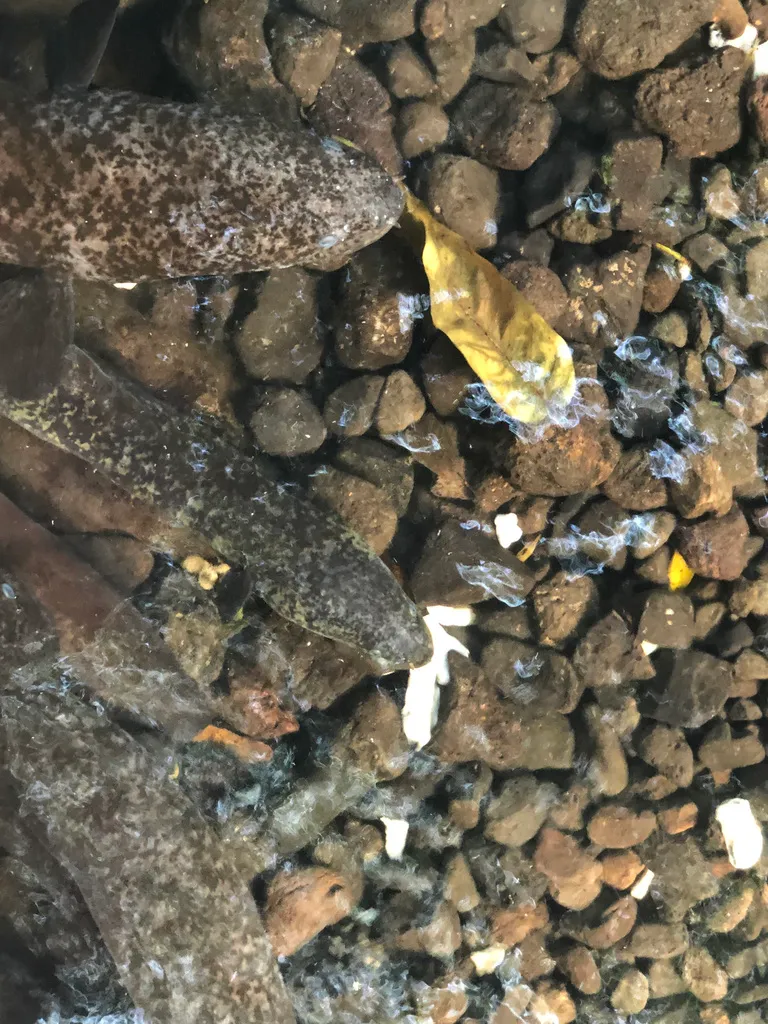
How big?
Linear scale · person 170 cm
- Max length
- 200 cm
- Max weight
- 20.5 kg
How to identify
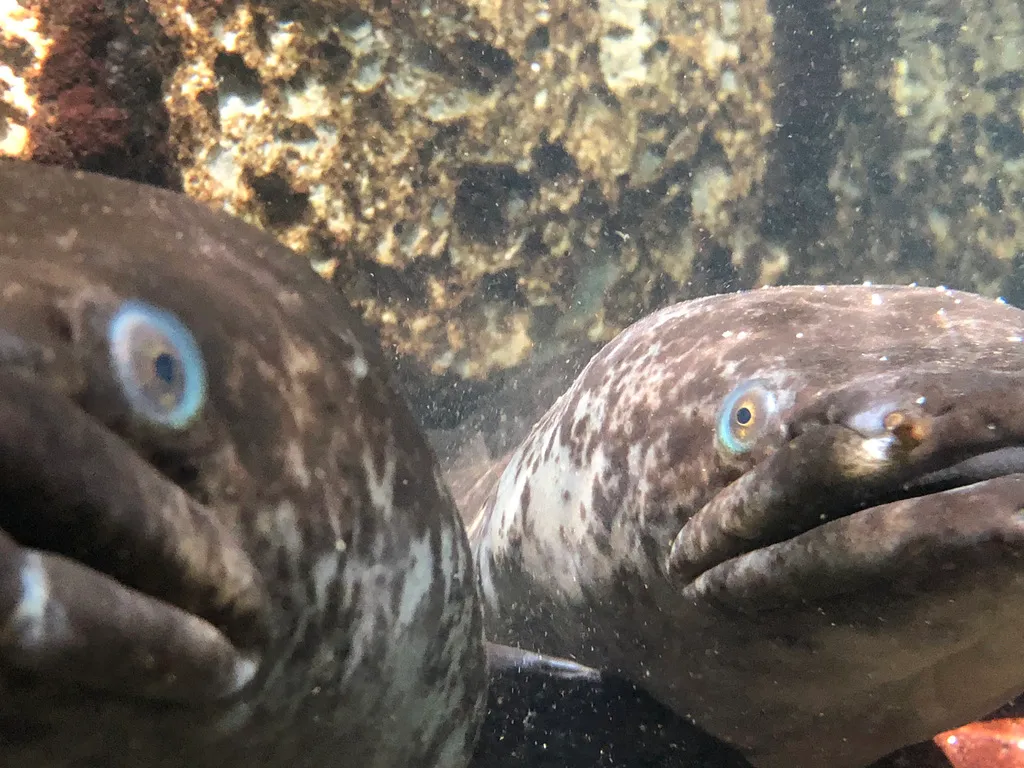
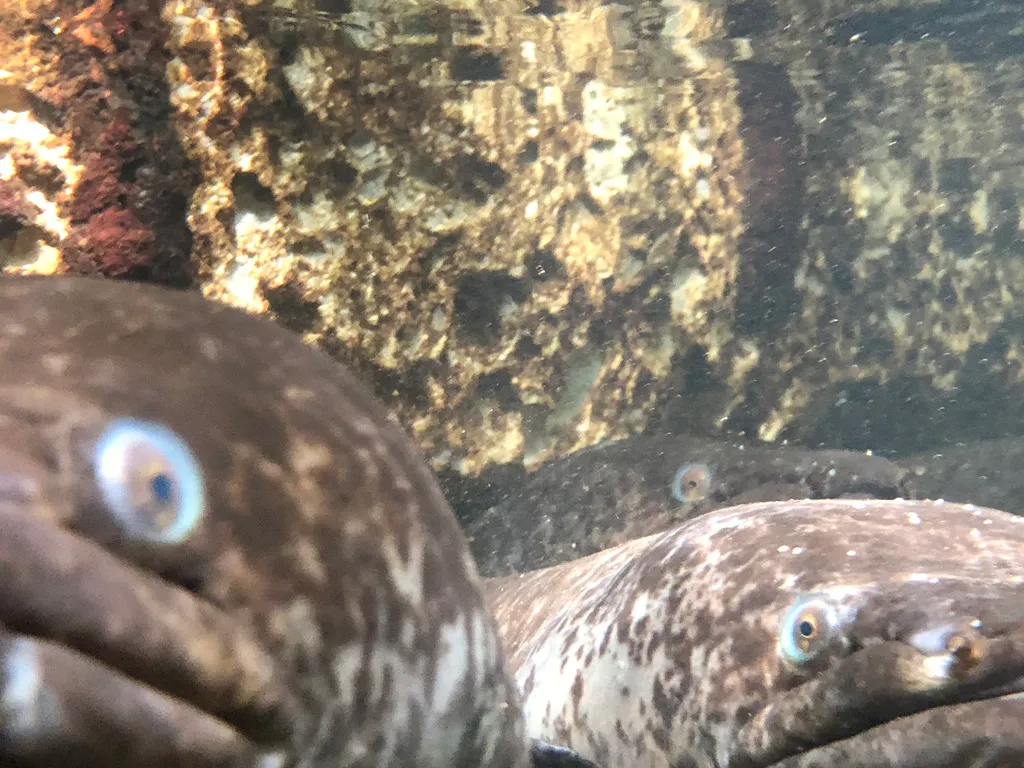
- A cylindrical body with thick, fleshy lips and a lower jaw that sticks out.
- Yellow, with greenish-brown to black marbling on the back and a white belly. Young eels are greyer and less marbled.
- Dorsal and anal fins run together around the tail; the dorsal starts closer to the gills than to the vent. No pelvic fins.
Environment
- Water
- FreshwaterSaltwater
- Zone
- On or near the bottom
- Migration
- Lives in rivers, breeds in the sea
The bottom of fresh to brackish rivers, lakes and tributaries. It spends 8 to 20 years there before turning silver and swimming out to the open ocean to spawn.
- Diet
- Shrimp, crabs, fish and frogs. It is nocturnal.
Distribution
- Native
- The Indo-Pacific, from East Africa to French Polynesia and north to southern Japan, mostly in tropical climates. It has the widest range of any Anguilla eel.
Where it's been recorded
Recorded in 36 countries: American Samoa, Australia, Cambodia, China, Comoros, Cook Islands, Eswatini, Fiji, French Polynesia, Guam, India, Indonesia, Japan, Laos, Madagascar, Malaysia, Mauritius, Mayotte, Micronesia, Mozambique, New Caledonia, Palau, Papua New Guinea, Philippines, Réunion, Samoa, Seychelles, Solomon Islands, South Africa, Taiwan, Timor-Leste, Vanuatu, Vietnam, Wallis & Futuna, Yemen, and Zimbabwe.
Records from GBIF.org, CC0 and CC BY datasets only. Few records can mean few surveys, not few fish.
Status and uses
IUCN Red List: Least Concern (LC)
Category from the IUCN Red List; it may lag the latest assessment.
Uses: Food
Taxonomy
- KingdomAnimalia
- PhylumChordata
- SubphylumVertebrata
- InfraphylumGnathostomata
- ParvphylumOsteichthyes
- GigaclassActinopterygii
- SuperclassActinopteri
- ClassTeleostei
- OrderAnguilliformes
- SuborderAnguilloidei
- FamilyAnguillidae
- GenusAnguilla
- SpeciesAnguilla marmorata Quoy & Gaimard, 1824
Names in other languages
Names from Wikidata and Malaysian fisheries lists. Each is tagged with its language.
| Language | Names | Source |
|---|---|---|
| Chinese | 鲈鳗, 鱸鰻, 花鰻鱺 | wikidata.org |
| Acehnese | ileah | wikidata.org |
| Afrikaans | Reus-bontpaling | wikidata.org |
| Arabic | أنقليس مرقش عملاق | wikidata.org |
| Catalan | anguila tacada gegant | wikidata.org |
| Egyptian Arabic | انقليس مرقش عملاق | wikidata.org |
| Fijian | Duna | wikidata.org |
| French | Anguille marbrée, Grande anguille marbrée | wikidata.org |
| Hindi | संगमरमरी ईल | wikidata.org |
| Indonesian | Sidat kembang | wikidata.org |
Show 5 more languages
| Japanese | オオウナギ | wikidata.org |
|---|---|---|
| Korean | 무태장어 | wikidata.org |
| Macedonian | Џиновска шарена јагула | wikidata.org |
| Thai | ปลาเอี่ยนหู | wikidata.org |
| Vietnamese | Cá chình hoa | wikidata.org |
More photos
Sources
Last reviewed 18 November 2026
- Giant mottled eelen.wikipedia.org
- Anguilla marmorata Quoy & Gaimard, 1824gbif.org
- marbled eelwikidata.org
- Anguilla marmorata Quoy & Gaimard, 1824catalogueoflife.org
Photo credits
Data credits
- IUCN Red List category, via GBIF (CC BY 4.0).
- Range map from records on GBIF.org (CC0 and CC BY datasets only).
- Classification from Catalogue of Life (CC BY 4.0).