Fish profile · Loricariidae
Golden otocinclus
Macrotocinclus affinis
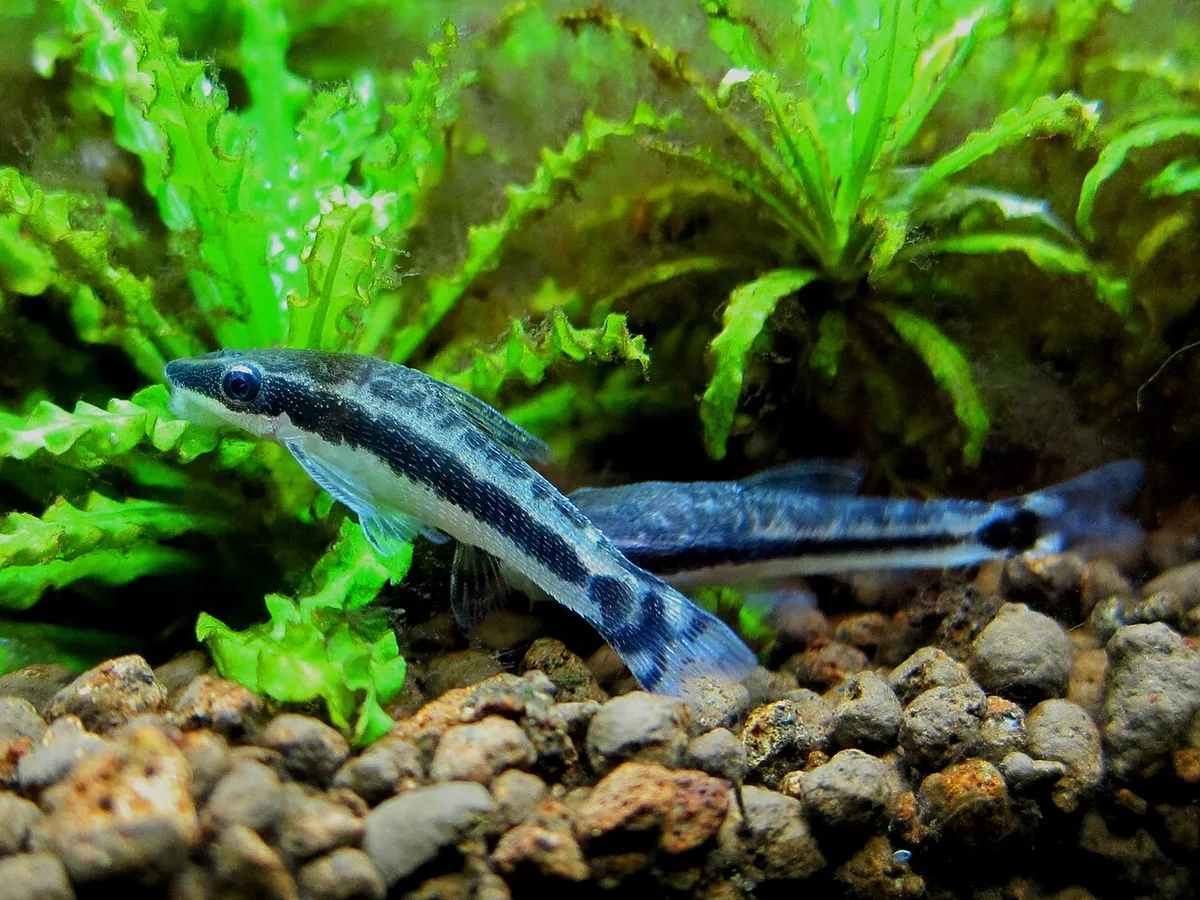
The golden otocinclus is a tiny algae-eating catfish from southeastern Brazil. The otocinclus sold to control algae in home aquariums are usually other, related species.
Last reviewed 23 November 2026 · 4 sources
How big?
Linear scale · hand 18 cm
- Max length
- 5 cm
- without the tail
How to identify
- A small suckermouth catfish with a narrow dark stripe along the side.
- Its stripe makes it look more like a Corydoras catfish than a true Otocinclus, which it mimics.
Environment
Distribution
- Native
- Southeastern Brazil: northern Rio de Janeiro state and the Ribeira de Iguape River in São Paulo state.
Where it's been recorded
Recorded in 2 countries: Bolivia and Brazil.
Records from GBIF.org, CC0 and CC BY datasets only. Few records can mean few surveys, not few fish.
Status and uses
IUCN Red List: Least Concern (LC)
Category from the IUCN Red List; it may lag the latest assessment.
Uses: Aquarium
Taxonomy
- KingdomAnimalia
- PhylumChordata
- SubphylumVertebrata
- InfraphylumGnathostomata
- ParvphylumOsteichthyes
- GigaclassActinopterygii
- SuperclassActinopteri
- ClassTeleostei
- OrderSiluriformes
- SuborderSiluroidei
- FamilyLoricariidae
- SubfamilyHypoptopomatinae
- GenusMacrotocinclus
- SpeciesMacrotocinclus affinis (Steindachner, 1877)
Types: Types of catfish
Names in other languages
Names from Wikidata and Malaysian fisheries lists. Each is tagged with its language.
| Language | Names | Source |
|---|---|---|
| Chinese | 篩耳鯰 | wikidata.org |
| Dutch | Dwergmeerval | wikidata.org |
| Egyptian Arabic | ماكروتوسينكلوس افينى | wikidata.org |
| Finnish | raitanuolimonni | wikidata.org |
| Hindi | मैक्रोटोसिंक्लस एफ़िनिस | wikidata.org |
| Hungarian | Sávos törpe szívóharcsa | wikidata.org |
| Polish | Otocinklus przyujściowy | wikidata.org |
Sources
Last reviewed 23 November 2026
Photo credits

Data credits
- IUCN Red List category, via GBIF (CC BY 4.0).
- Range map from records on GBIF.org (CC0 and CC BY datasets only).
- Classification from Catalogue of Life (CC BY 4.0).