Fish profile · Pangasiidae
Mekong giant catfish
Pangasianodon gigas
The Mekong giant catfish is one of the world's largest freshwater fish, up to 3 m and 300 kg. It is Critically Endangered after dams and overfishing.
Last reviewed 24 November 2026 · 8 sources
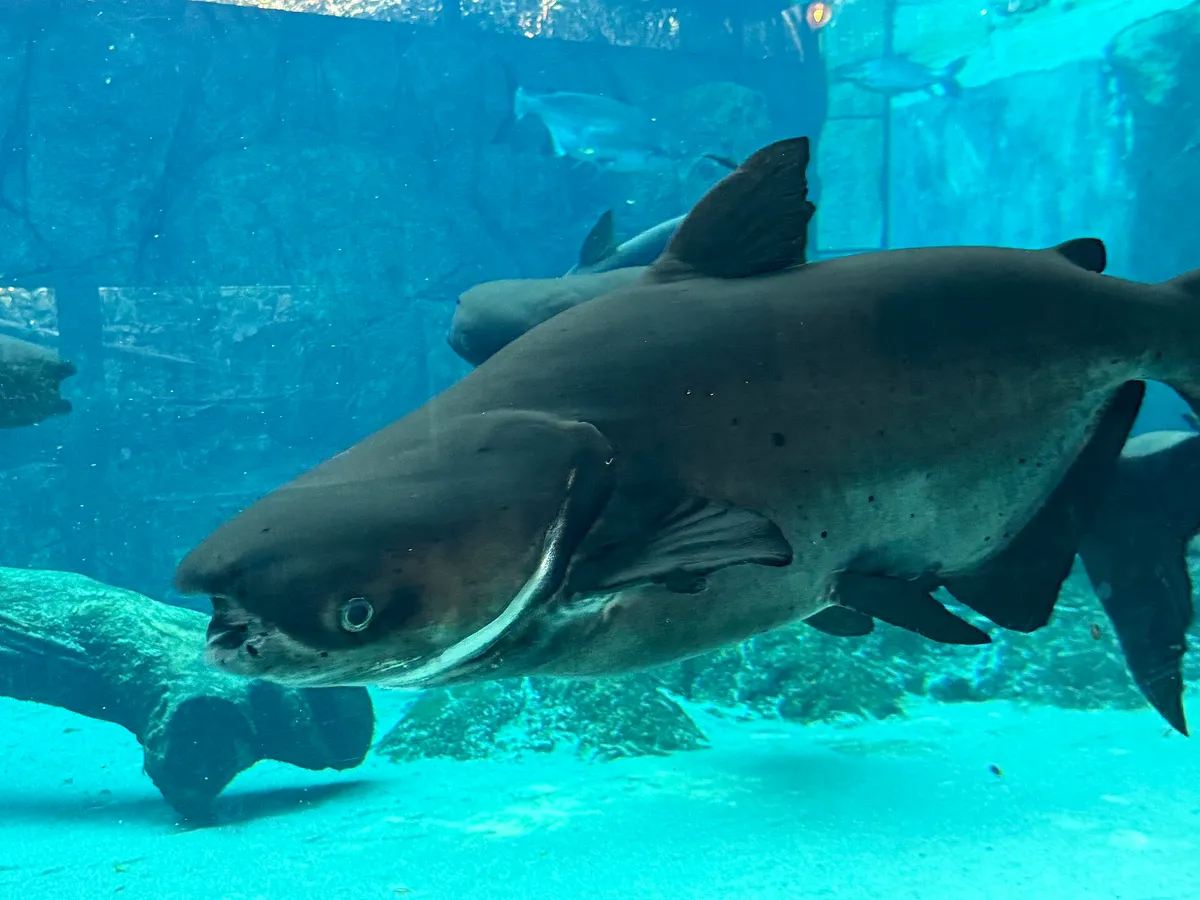
How big?
Linear scale · person 170 cm
- Max length
- 300 cm
- Max weight
- 350 kg
How to identify
- Grey to white, with no stripes.
- Adults have almost no barbels and no teeth. Young fish have both, but lose them by about 30–50 cm long.
- Grows extremely fast and can reach 150–200 kg in six years.
Look-alikes
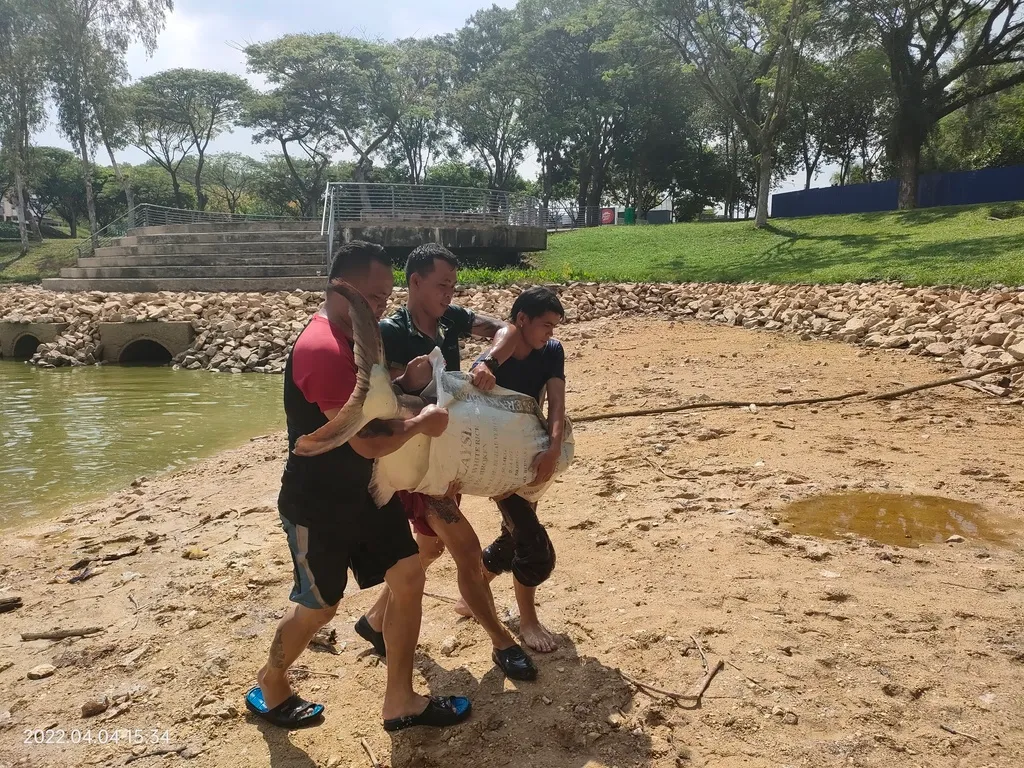 Chao Phraya giant catfish
The Chao Phraya giant catfish is a predatory catfish of the same rivers. The Mekong giant catfish has almost no barbels and no teeth as an adult, and grazes on algae.
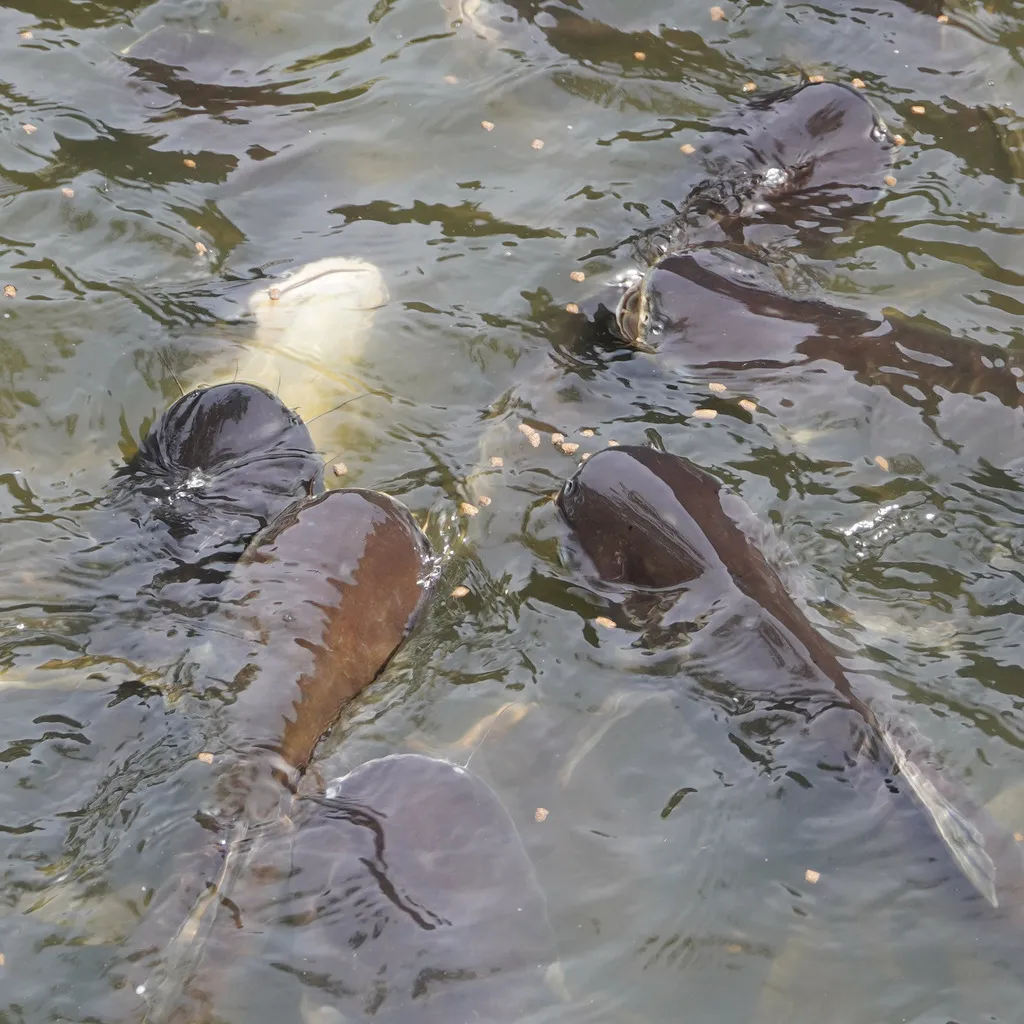 Iridescent shark
The iridescent shark is a pangasiid catfish too, but reaches about 1.3 m, far smaller than the Mekong giant catfish.
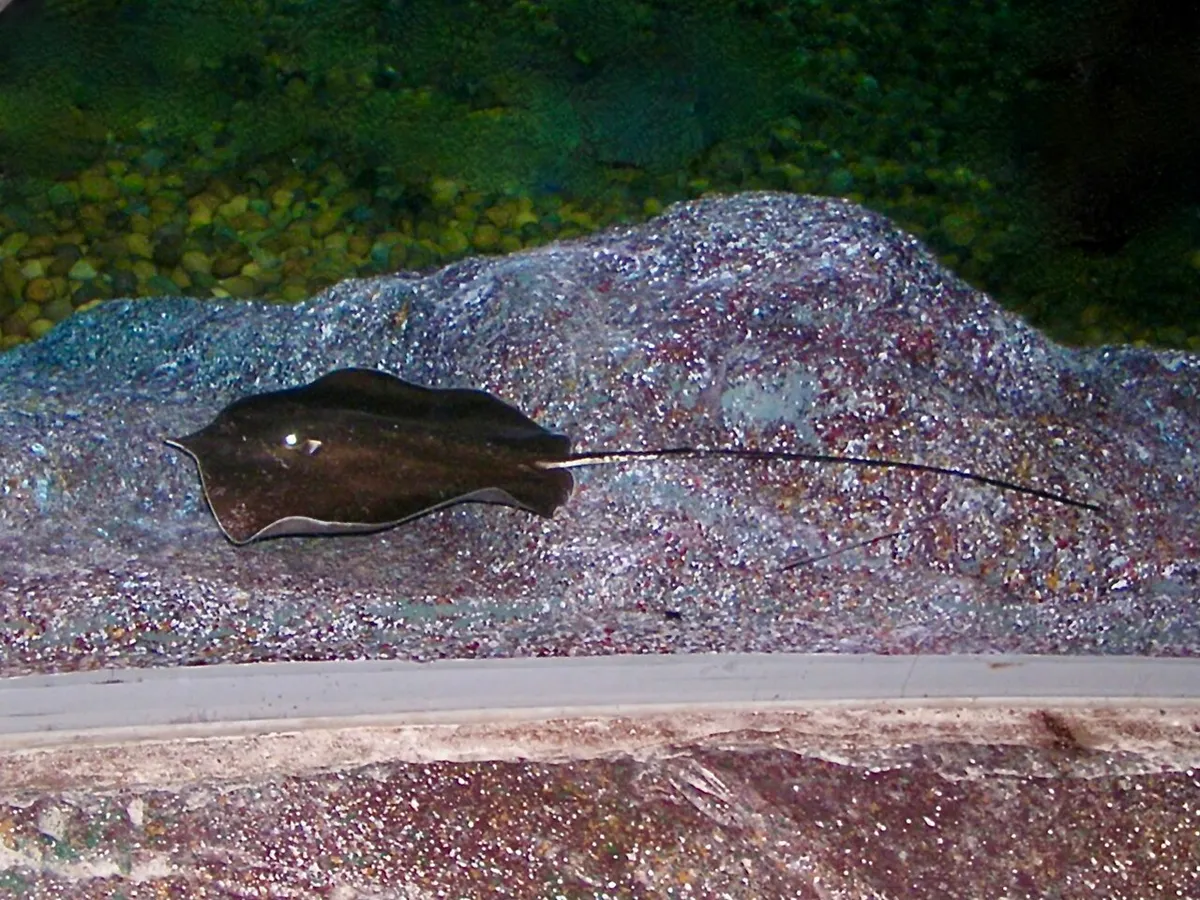 Giant freshwater stingray
Not a catfish: a ray from the same river that now holds the record as the largest freshwater fish.
Environment
- Water
- Freshwater
Mainly the deep main channel of the Mekong, over 10 m deep. It is also found in the Tonlé Sap river and lake in Cambodia, and moves upstream to spawn at the start of the rains.
- Diet
- Young fish eat zooplankton, and are cannibalistic. After about a year it grazes on algae growing on submerged rock.
Distribution
- Native
- The Mekong basin, once almost the whole river from southern Vietnam to Yunnan in China. Now only small, isolated groups remain, in the middle Mekong.
Where it's been recorded
Shown as rough areas to protect a threatened fish.
Recorded in 1 country: Vietnam.
Records from GBIF.org, CC0 and CC BY datasets only. Few records can mean few surveys, not few fish.
Questions
- Is the Mekong giant catfish the biggest freshwater fish in the world?
- It was long counted as the biggest. The largest one recorded in Thailand, caught in 2005, was a female 2.7 m long and 293 kg. In June 2022 Guinness World Records recognised a giant freshwater stingray caught in Cambodia, about 300 kg and 2.2 m across, as the largest freshwater fish officially recorded.
- How big can it get?
- Up to about 3 m long, and reportedly up to 350 kg. It grows very fast and can reach 150 to 200 kg in six years.
- Why is it critically endangered?
- Overfishing, dams and the loss of its river habitat. Dams block the long migrations it makes to spawn. Catch data suggest numbers have fallen by about 80 percent, and only 11 were caught in 2001 and 8 in 2002.
- What is being done to save it?
- Fishing for it in the wild is illegal in Thailand, Laos and Cambodia, and it is on CITES Appendix I, which bans international trade in wild fish. Thailand breeds it to restock the Mekong, and researchers tag and release the fish they find. A 2024 WWF report calls for removing old dams and setting up protected zones that cross borders.
- Can you fish for Mekong giant catfish?
- Only in Thailand's stocked fishing lakes, where the fish are bought from the government's breeding programme. The money helps pay for the programme. Fish in those lakes are mostly around 18 kg, with some reaching 140 kg. It does not breed in lakes.
Status and uses
Taxonomy
- KingdomAnimalia
- PhylumChordata
- SubphylumVertebrata
- InfraphylumGnathostomata
- ParvphylumOsteichthyes
- GigaclassActinopterygii
- SuperclassActinopteri
- ClassTeleostei
- OrderSiluriformes
- SuborderSiluroidei
- FamilyPangasiidae
- GenusPangasianodon
- SpeciesPangasianodon gigas Chevey, 1931
Types: Types of catfish
Names in other languages
Names from Wikidata and Malaysian fisheries lists. Each is tagged with its language.
| Language | Names | Source |
|---|---|---|
| Malay | patin gergasi Mekong | wikidata.org |
| Chinese | 巨无齿𩷶, 巨無齒𩷶 | wikidata.org |
| Tamil | மேக்கொங் மாகெளிறு | wikidata.org |
| Arabic | سمكة السلور العملاقة | wikidata.org |
| Bulgarian | гигантски сом пангасианодон | wikidata.org |
| Catalan | peix gat gegant del Mekong | wikidata.org |
| Egyptian Arabic | سمكة السلور العملاقه | wikidata.org |
| Esperanto | Mekonga giganta siluro | wikidata.org |
| Finnish | jättihaimonni | wikidata.org |
| French | Silure de verre géant | wikidata.org |
Show 20 more languages
| German | Mekong-Riesenwels | wikidata.org |
|---|---|---|
| Hebrew | שפמנון המקונג | wikidata.org |
| Hindi | मेकांग विशाल कैटफ़िश | wikidata.org |
| Indonesian | Patin raksasa Mekong | wikidata.org |
| Japanese | メコンオオナマズ | wikidata.org |
| Khmer | ត្រីរាជ | wikidata.org |
| Korean | 메콩대형메기 | wikidata.org |
| Malayalam | മേക്കോങ്ങ് ജയന്റ് ക്യാറ്റ് ഫിഷ് | wikidata.org |
| Norwegian Bokmål | mekongkjempemalle | wikidata.org |
| Pashto | د مېکونگ پيشی کب | wikidata.org |
| Persian | گربهماهی غولپیکر مکونگی | wikidata.org |
| Polish | Pangaz | wikidata.org |
| Portuguese | Peixe-gato-gigante | wikidata.org |
| Russian | Гигантский шильбовый сом | wikidata.org |
| Slovenian | orjaški som | wikidata.org |
| Spanish | Pez Gato Gigante | wikidata.org |
| Swedish | Mekongjättemal | wikidata.org |
| Thai | ปลาบึก | wikidata.org |
| Turkish | Mekong dev yayın balığı | wikidata.org |
| Vietnamese | cá tra dầu | wikidata.org |
Sources
Last reviewed 24 November 2026
- Mekong giant catfishen.wikipedia.org
- Pangasianodon gigas Chevey, 1931gbif.org
- Mekong giant catfishwikidata.org
- Pangasianodon gigas Chevey, 1931catalogueoflife.org
- 646-pound catfish believed to be world's largest fishnews.mongabay.com
- A dam shame: the plight of the Mekong giant catfishnews.mongabay.com
- Giant fishes in the Mekong River at risk of extinction | Natural History Museumnhm.ac.uk
- Record-breaking ray confirmed as world’s largest freshwater fishguinnessworldrecords.com
Photo credits
- Photo 1, top of the page: Cool critter channel / Wikimedia Commons (CC BY 4.0) · CC BY · Source
- Chao Phraya giant catfish, in look-alikes: (c) Ong Jyh Seng, some rights reserved (CC BY-SA) · CC BY-SA · Source
- Iridescent shark, in look-alikes: (c) nbasargin, some rights reserved (CC BY) · CC BY · Source
- Giant freshwater stingray, in look-alikes: NasserHalaweh / Wikimedia Commons · CC BY-SA · Source


Data credits
- IUCN Red List category, via GBIF (CC BY 4.0).
- Range map from records on GBIF.org (CC0 and CC BY datasets only).
- Classification from Catalogue of Life (CC BY 4.0).