Fish profile · Clariidae
Walking catfish
Clarias batrachus
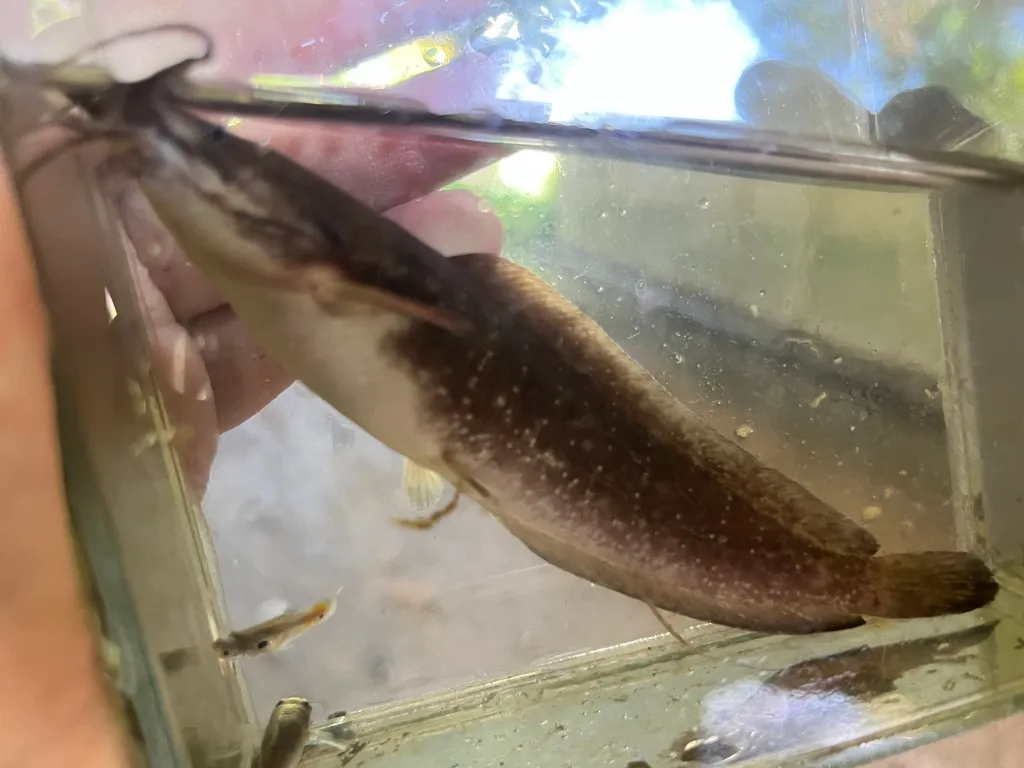
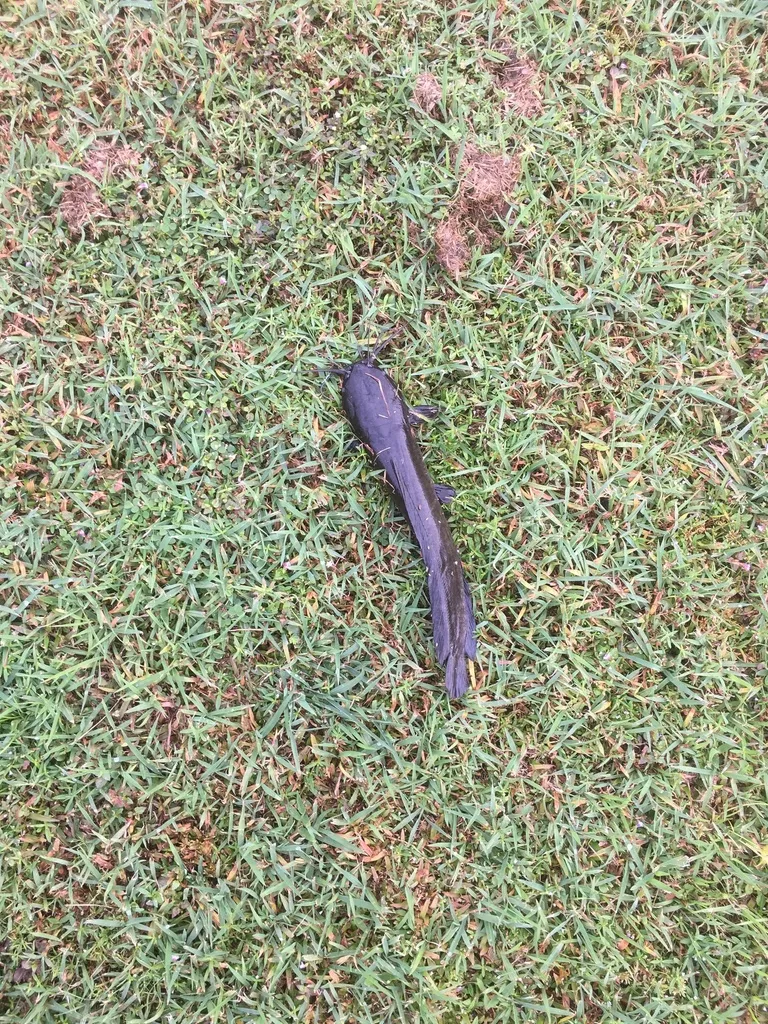
The walking catfish gets its name from wriggling across land on its pectoral fins to reach new water. It thrives in stagnant, low-oxygen water and is widely farmed. The name is applied to several closely related fish in Southeast and South Asia, so much of what is written about it may refer to a relative.
Last reviewed 18 November 2026 · 4 sources
How big?
Linear scale · person 170 cm
- Max length
- 50 cm
- Max weight
- 1.2 kg
How to identify
- A long body, grey to grey-brown, often with small white spots along the sides.
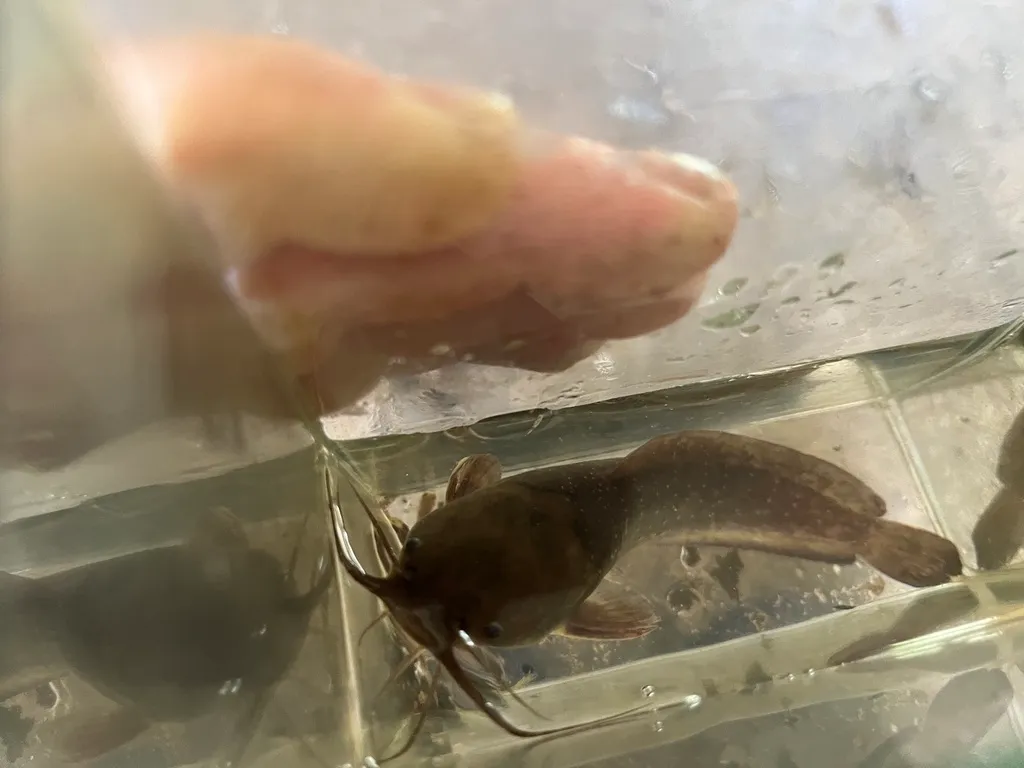
- Long dorsal and anal fins and several pairs of barbels.
- Scaleless skin covered in mucus, and no adipose fin. That tells it from the North American catfishes.
- Hidden stinging spines behind the fins, so handle it with care.
Environment
- Water
- Freshwater
Lowland riversRice fields and canals
Stagnant, often low-oxygen water such as muddy ponds, canals and ditches. It stays on or near the bottom and gulps air at the surface. It can survive about 18 hours out of water.
Distribution
- Native
- Maritime Southeast Asia. The true Clarias batrachus is confirmed only from Java. Close relatives that are often confused with it live in northeast India and Bangladesh, Indochina, and the Thai–Malay Peninsula, Sumatra and Borneo. The Philippine fish, called hito, is not yet placed.
Where it's been recorded
Recorded in 16 countries: Bangladesh, Cambodia, China, India, Indonesia, Laos, Malaysia, Myanmar (Burma), Nepal, Papua New Guinea, Philippines, Singapore, Taiwan, Thailand, United States, and Vietnam.
Records from GBIF.org, CC0 and CC BY datasets only. Few records can mean few surveys, not few fish.
Eating
Kept in aquaculture, both the true walking catfish and its close relatives.
Status and uses
IUCN Red List: Least Concern (LC)
Category from the IUCN Red List; it may lag the latest assessment.
Uses: Food
Taxonomy
- KingdomAnimalia
- PhylumChordata
- SubphylumVertebrata
- InfraphylumGnathostomata
- ParvphylumOsteichthyes
- GigaclassActinopterygii
- SuperclassActinopteri
- ClassTeleostei
- OrderSiluriformes
- SuborderSiluroidei
- FamilyClariidae
- GenusClarias
- SpeciesClarias batrachus (Linnaeus, 1758)
Types: Types of catfish
Names in other languages
Names from Wikidata and Malaysian fisheries lists. Each is tagged with its language.
| Language | Names | Source |
|---|---|---|
| Malay | Keli kayu | wikidata.org |
| Chinese | 蟾胡鲶, 蟾鬍鯰 | wikidata.org |
| Acehnese | limbek | wikidata.org |
| Arabic | قرموط الكلاريس | wikidata.org |
| Assamese | মাগুৰ মাছ | wikidata.org |
| Bangla | মাগুর | wikidata.org |
| Burmese | ငါးခူ | wikidata.org |
| Czech | keříčkovec žabí | wikidata.org |
| Danish | Den gående malle | wikidata.org |
| Egyptian Arabic | قرموط الكلاريس | wikidata.org |
Show 19 more languages
| Ewe | Adewuyibɔ | wikidata.org |
|---|---|---|
| Finnish | konnamonni | wikidata.org |
| German | Froschwels | wikidata.org |
| Hebrew | שפמנון מהלך | wikidata.org |
| Hindi | माँगुर | wikidata.org |
| Indonesian | lele jawa | wikidata.org |
| Japanese | ウォーキングキャットフィッシュ | wikidata.org |
| Javanese | lele jawa | wikidata.org |
| Korean | 워킹캣피시 | wikidata.org |
| Maithili | माङ्गुर | wikidata.org |
| Malayalam | ഏരിവാള | wikidata.org |
| Minangkabau | Limbek jawa | wikidata.org |
| Russian | Лягушковый клариевый сом | wikidata.org |
| Shan | ပႃလုၵ်း | wikidata.org |
| Swedish | Ålmal | wikidata.org |
| Telugu | మార్పు | wikidata.org |
| Thai | ปลาดุกด้าน | wikidata.org |
| Ukrainian | Кларій ходячий | wikidata.org |
| Vietnamese | cá trê trắng | wikidata.org |
More photos
Sources
Last reviewed 18 November 2026
- Walking catfishen.wikipedia.org
- Clarias batrachus (Linnaeus, 1758)gbif.org
- Clarias batrachuswikidata.org
- Clarias batrachus (Linnaeus, 1758)catalogueoflife.org
Photo credits
Data credits
- IUCN Red List category, via GBIF (CC BY 4.0).
- Range map from records on GBIF.org (CC0 and CC BY datasets only).
- Classification from Catalogue of Life (CC BY 4.0).